Certified Peptides Payments in 2026: Crypto Checkout Architecture for High-Risk Merchants

Certified peptides merchants usually discover the payments problem late. The catalog is ready, the lab documentation is organized, the storefront works, and then the processor rejects the business, freezes funds, or asks for another round of underwriting that never ends.
Teams think the problem is certified peptides as a product category. The real problem is the payment architecture around a category that needs evidence, trust, settlement clarity, and operational control.
That changes the conversation. A crypto checkout button can help, but it does not solve state management, invoice expiration, customer support, custody boundaries, refunds, disputes, or reconciliation. The practical question is not whether crypto can be accepted. The practical question is whether the merchant can run a repeatable payment workflow without creating a support queue every time a buyer sends the wrong amount or a transaction confirms late.
This guide treats certified peptides payments as an architecture and workflow problem for developers, merchants, fintech founders, and blockchain engineers building in production.
Table of contents
- Certified peptides are a workflow problem
- Map the certified peptides commerce stack
- Design checkout around state, not buttons
- Certified peptides payments need verification and trust signals
- Webhooks, confirmations, and reconciliation are the backend
- Escrow and dispute handling for peptide orders
- What works in production
- What fails when teams implement certified peptides badly
- Operating the merchant side in 2026
- Where coinpayportal.com fits
- Closing architecture checklist
Certified peptides are a workflow problem
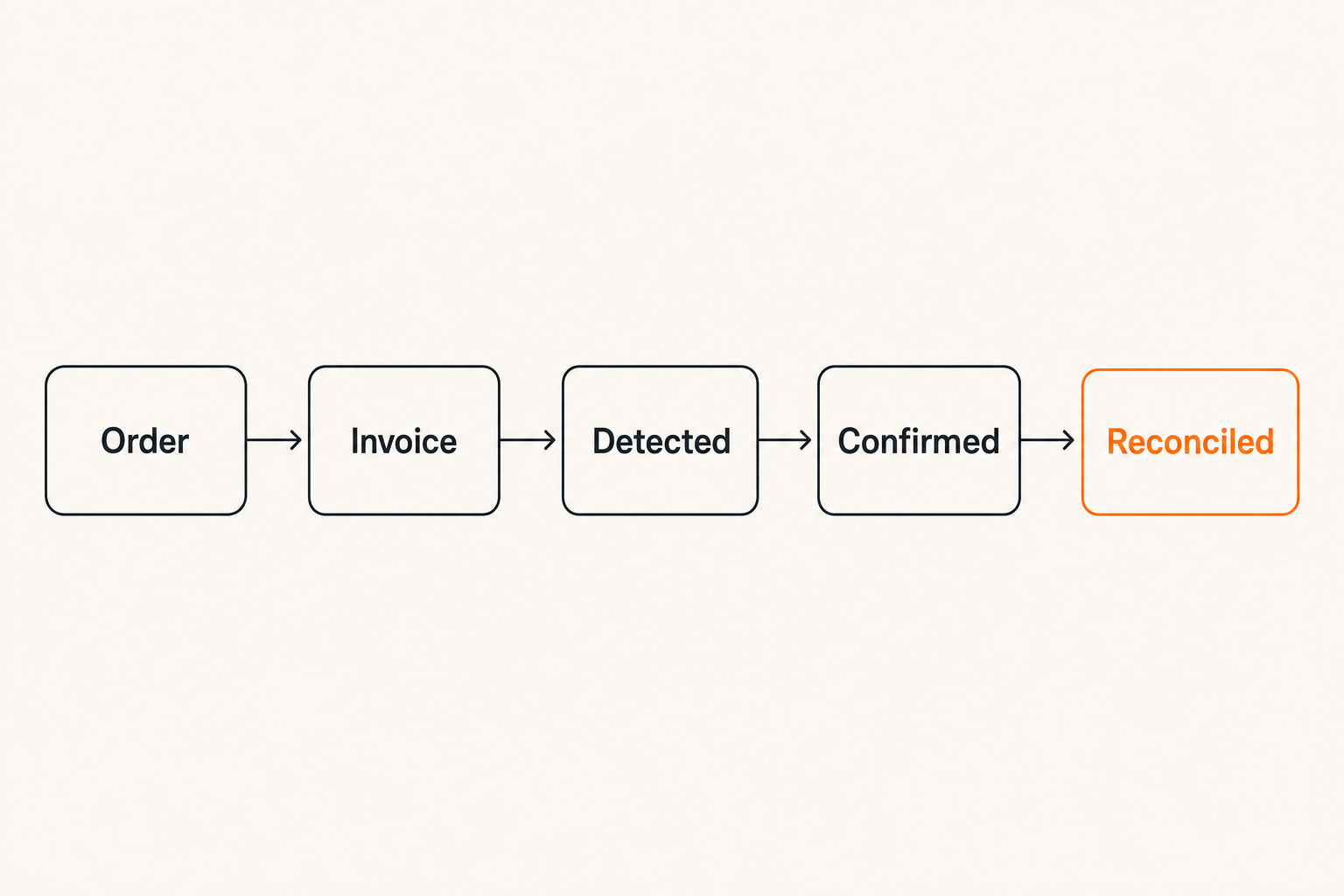
Processor risk is only one layer
The mistake teams make is treating payments as a provider-selection task. They ask which processor accepts the category, which coin has the lowest fee, or which wallet is easiest for buyers. Those are useful questions, but they are not the architecture.
Certified peptides commerce has several layers that create operational risk:
- Product claims and how they are represented
- Buyer eligibility and regional restrictions
- Order documentation and certificate handling
- Payment finality and confirmation timing
- Fulfillment gates and support escalation
- Refund, replacement, and dispute rules
- Merchant-side reconciliation and reporting
If any one of those layers is handled manually, the payment system will leak work into support. That is where most teams feel the real cost. Not at the checkout page. In the queue.
A useful way to think about it is this: the payment gateway is not just collecting funds. It is coordinating a handoff between customer intent, blockchain settlement, merchant risk rules, and order fulfillment.
Practical rule: For certified peptides, never design the payment flow as a single payment status. Design it as an order lifecycle with evidence, settlement, and fulfillment gates.
The buyer journey creates payment state
A buyer does not experience your architecture as API calls. They experience it as uncertainty. Did the invoice expire? Did the payment arrive? Why does the order still say pending? Can the merchant see the transaction hash? Is the certificate tied to the exact product batch?
That uncertainty creates tickets. Tickets create manual lookup work. Manual lookup work creates mistakes.
In crypto payments, the buyer journey is stateful even when the UI looks simple. A typical purchase may move through quote created, invoice displayed, payment detected, underpaid, overpaid, confirmed, settled, fulfillment approved, shipped, and closed. If your storefront only understands paid and unpaid, it will collapse meaningful states into vague messages.
That is especially painful for peptide merchants because buyers often need confidence before they pay and clear confirmation after they pay. The product category already carries scrutiny. The payment flow should reduce ambiguity, not add more.
Map the certified peptides commerce stack
From storefront to chain confirmation
The certified peptides commerce stack has more moving parts than a standard card checkout. A card flow hides a lot of state behind authorization, capture, and settlement. Crypto exposes more of the process to the merchant and buyer.
A practical stack looks like this:
| Layer | What it does | What breaks if ignored |
|---|---|---|
| Storefront | Product selection, cart, customer account | Orders lack product and buyer context |
| Documentation | Certificates, batch data, terms | Support cannot answer trust questions |
| Checkout API | Creates invoices and quotes | Prices drift or invoices duplicate |
| Wallet or gateway | Receives and detects payment | Funds arrive without order mapping |
| Webhooks | Push payment events | Fulfillment fires too early or too late |
| Reconciliation | Matches order, chain, and ledger | Finance cannot close the day |
| Support console | Shows order and transaction evidence | Every issue requires engineering |
This is why prior architecture work matters. If you are already evaluating peptide category infrastructure, our deeper guide to peptide payments and crypto infrastructure covers the merchant-side pressures that usually force teams away from conventional processors.
The checkout button is only one component. The architecture is the set of guarantees around that button.
Where custody and compliance boundaries sit
For developers, the biggest design decision is often custody. Who controls funds during the transaction? Does the gateway take custody? Does the merchant receive directly? Is there an escrow step? Are refunds handled by the merchant wallet or through a managed process?
This is not only a legal or policy question. It affects your data model, support process, and failure recovery.
A non-custodial design gives the merchant stronger control and reduces dependence on a provider balance. But it also means the merchant must understand wallet operations, address management, and payout reconciliation. A custodial design can simplify some operational flows, but it introduces account risk and withdrawal dependency.
Practical rule: Decide the custody boundary before building checkout UI. Custody determines reconciliation, refund authority, dispute handling, and incident response.
Related reading from our network: teams evaluating decentralized infrastructure face similar ownership tradeoffs in compute workflows, especially around retries and operator control, in this Akash Network alternative workflow guide.
Design checkout around state, not buttons
The states you need to model
A certified peptides checkout should not depend on a single boolean field named paid. That field may be useful for display, but it is not enough for operations.
At minimum, model these payment states:
- Created: invoice exists but no payment observed
- Awaiting payment: buyer has address, amount, and expiration
- Detected: transaction seen but not sufficiently confirmed
- Underpaid: amount received is below acceptable threshold
- Overpaid: amount received is above expected amount
- Confirmed: chain confirmation policy satisfied
- Expired: invoice window closed before valid payment
- Settled: merchant accounting record finalized
- Refunded or credited: exception resolved
- Disputed: order requires manual review
What breaks in practice is that teams combine detected and confirmed. They see an inbound transaction and release fulfillment before confirmation policy is satisfied. Then a reorg, replacement, or mempool confusion turns a payment event into a fulfillment incident.
You do not need to over-engineer this. You do need a state machine that prevents impossible transitions. Expired should not become settled without an explicit exception. Underpaid should not become fulfilled without a merchant decision. Confirmed should not fire twice because a webhook retried.
Why idempotency matters
Crypto payments are asynchronous. APIs retry. Buyers refresh. Webhooks arrive twice. Nodes disagree temporarily. Your system must assume duplicate inputs.
Idempotency is the difference between a resilient checkout and duplicate order chaos. When a buyer clicks pay twice, your backend should return the same active invoice when appropriate. When a webhook is delivered multiple times, your handler should safely process it once. When reconciliation runs nightly, it should not create duplicate ledger entries.
A simple pattern works well:
- Use a stable merchant_order_id from the storefront
- Generate one active invoice per order and currency until expiration
- Store gateway_event_id or transaction hash events separately
- Apply state transitions through a guarded function
- Record every transition in an audit log
The practical question is not whether duplication will happen. It will. The question is whether duplication changes money, fulfillment, or accounting state.
Practical rule: Every payment event handler should be safe to run twice. If running it twice changes fulfillment or ledger totals, the handler is not production-ready.
Certified peptides payments need verification and trust signals
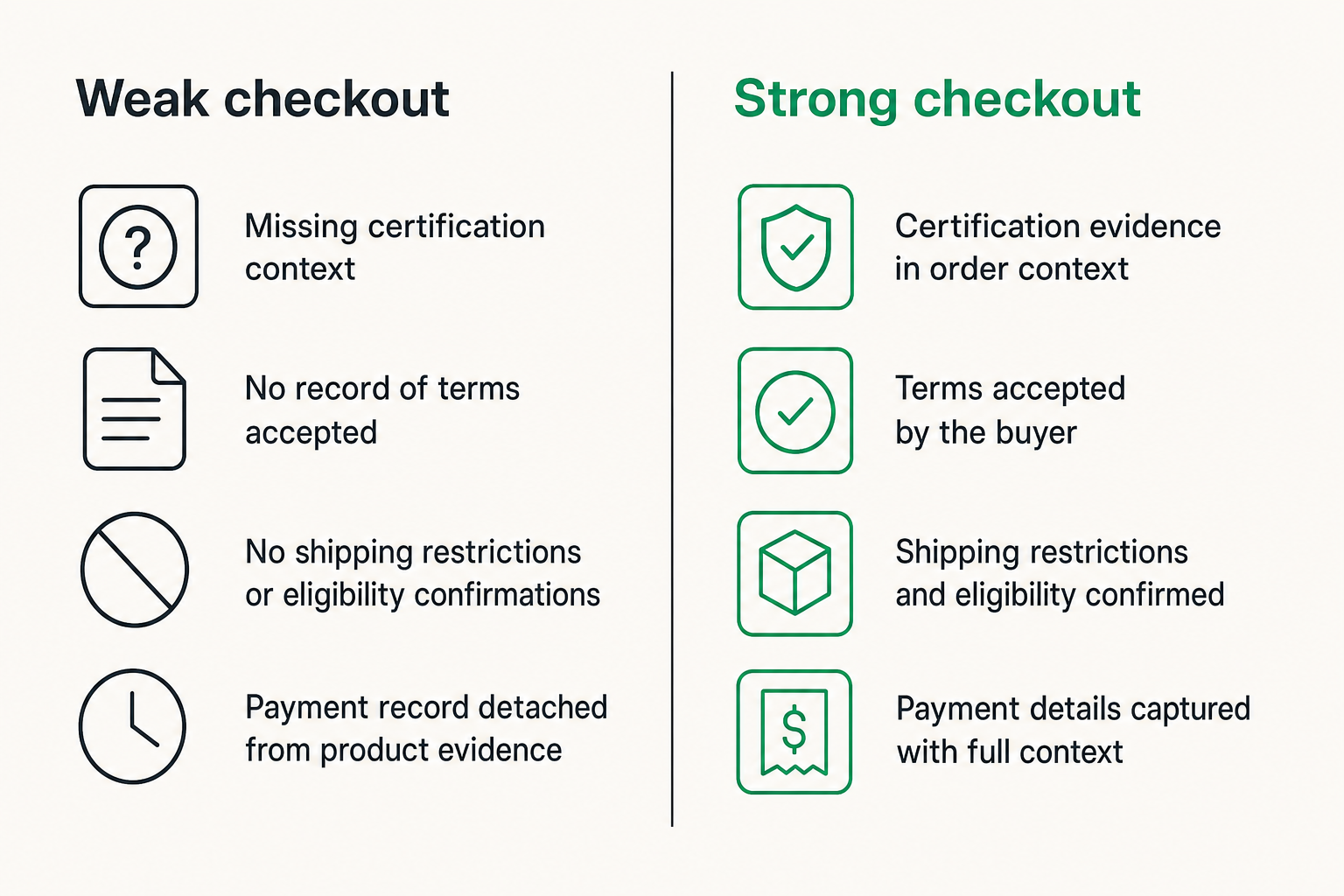
Certification evidence belongs in order context
The phrase certified peptides implies evidence. For merchants, that evidence may include batch details, certificates of analysis, testing documentation, storage notes, or product-specific disclaimers. The payment system does not need to validate scientific claims, but it should preserve the context that the buyer saw when they paid.
That means your order record should capture:
- Product SKU and batch identifier
- Certificate or documentation version shown at purchase time
- Terms accepted by the buyer
- Shipping restrictions or eligibility confirmations
- Checkout timestamp and invoice expiration
- Payment network, asset, amount, and transaction hash
This matters because disputes are usually about context. The buyer says they expected one thing. Support needs to know exactly what was shown, what was accepted, and what was paid. If the payment record is detached from the product evidence, support becomes archaeology.
There is a temptation to keep payment records clean and product records separate. That is fine for internal normalization, but your support view should join them. The operator should not need three admin panels to answer one ticket.
Reputation reduces support load
Trust signals are not decoration. They change payment behavior. A buyer who sees credible merchant reputation, clear order terms, and a precise payment invoice is less likely to hesitate, abandon, or open a ticket minutes after broadcasting a transaction.
For categories with higher perceived risk, reputation and payment clarity belong together. If your platform supports merchant reputation pages or public trust signals, connect them to checkout rather than burying them in a footer. CoinPay provides a dedicated merchant reputation layer that can be used as part of the buyer-confidence path rather than a separate marketing artifact.
The mistake teams make is assuming blockchain transparency is enough. A transaction hash proves movement of funds. It does not prove merchant reliability, product documentation, or fulfillment quality.
A good certified peptides checkout answers three buyer questions before payment:
- Am I paying the right merchant?
- Am I paying for the documented product I selected?
- Will I get a clear order status after payment?
If the answer to any of those is unclear, the support burden increases.
Webhooks, confirmations, and reconciliation are the backend
Treat webhooks as events, not truth
Webhooks are delivery mechanisms. They are not your source of truth. Your source of truth is the combination of your order database, gateway records, and chain-observable settlement data.
A webhook can be delayed, duplicated, dropped, or delivered out of order. A production system treats each webhook as a signal that something may have changed, then verifies whether the transition is valid.
A robust webhook handler should:
- Authenticate the webhook signature
- Parse the event type and event id
- Load the invoice and current order state
- Check whether the transition is allowed
- Persist the event before side effects
- Trigger fulfillment only after confirmation policy
- Return success for already-processed duplicates
Do not put fulfillment logic directly in a webhook handler without guardrails. Use the handler to enqueue a job or transition state. Then let a fulfillment worker act on confirmed, eligible orders.
Related reading from our network: media teams hit the same trap when they treat a response as the system instead of modeling jobs and observability; this Django streaming workflow architecture is a useful adjacent example.
Reconcile by invoice and settlement amount
Reconciliation is where payment architecture becomes real. If finance cannot match orders to received funds, the system is not done.
For crypto payments, reconcile on multiple keys:
| Reconciliation key | Why it matters |
|---|---|
| merchant_order_id | Connects storefront and payment |
| invoice_id | Connects gateway quote and payment state |
| asset and network | Prevents wrong-chain confusion |
| expected_amount | Defines what the buyer was asked to send |
| received_amount | Captures underpayment or overpayment |
| transaction_hash | Provides chain-level evidence |
| confirmation_time | Supports fulfillment and reporting |
| settlement_address | Confirms merchant receipt path |
Do not rely only on transaction hash. One order may involve multiple payments. One payment may be applied manually after expiration. A buyer may send from an exchange and lose access to the sending address. The invoice is the commercial object. The transaction is the settlement evidence.
The better pattern is to reconcile at the invoice level and attach one or more payment observations to it.
Escrow and dispute handling for peptide orders
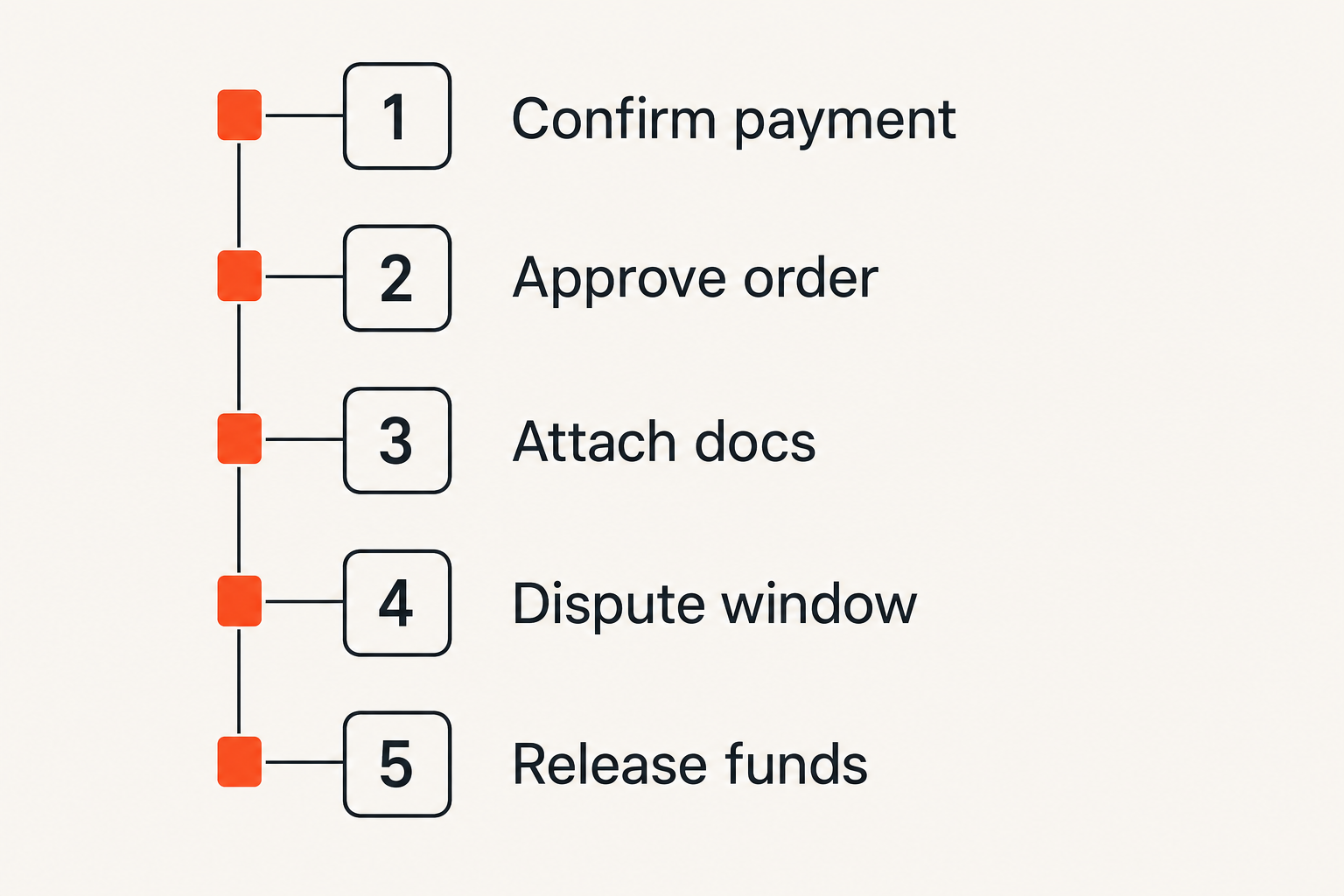
When escrow is useful
Escrow is useful when trust is incomplete but the transaction is still worth saving. In certified peptides commerce, escrow can help when buyers want assurance that funds will not release until agreed conditions are met, or when merchants want a structured dispute path instead of informal refund demands.
Escrow is not a magic trust layer. It is a rules engine around release conditions. Those rules need to be explicit before money moves.
Common release conditions include:
- Payment confirmed on the selected network
- Merchant accepts the order after inventory review
- Buyer receives documentation or tracking details
- A defined inspection or dispute window expires
- An admin resolves an exception
If you need escrow, model it as part of the order lifecycle, not as an afterthought. CoinPay has an escrow workflow designed for merchants that need an additional trust layer between payment and release.
What breaks without release rules
What breaks in practice is ambiguity. The buyer thinks escrow means they can cancel at any time. The merchant thinks escrow means funds are guaranteed after payment. Support becomes the interpreter of unwritten policy.
Bad escrow implementations create more disputes than they solve because they do not define:
- Who can open a dispute
- How long the dispute window lasts
- What evidence is required
- Whether partial release is allowed
- What happens if a party is unresponsive
- Which fees are refundable
Practical rule: Escrow should reduce ambiguity. If the release policy cannot be explained in five bullet points before checkout, it is not ready for production.
For physical goods operators, payment and fulfillment rules also collide with shipping promises. Related reading from our network: the same operational coupling shows up in this guide on how to sell products online with a shipping system.
What works in production
A practical implementation sequence
The implementation order matters. Many teams start with wallet connection or checkout UI because it is visible. That is backwards. Start with the lifecycle.
A production sequence for certified peptides payments looks like this:
- Define allowed products, buyer restrictions, and documentation requirements.
- Create the order state machine before integrating a payment provider.
- Add invoice creation with expiration, asset, network, and amount locking.
- Store certification context and accepted terms on the order.
- Implement payment detection and confirmation transitions.
- Add idempotent webhook handling and event persistence.
- Gate fulfillment on confirmed payment plus merchant eligibility rules.
- Build support views that show order, invoice, and chain evidence together.
- Run reconciliation jobs that compare orders, invoices, and received funds.
- Add exception paths for underpayment, overpayment, refund, escrow, and dispute cases.
This sequence is not glamorous. It works because it treats payments as an operational system.
If you are building directly against CoinPay, the developer surface in the CoinPay documentation is where the API, integration, and gateway concepts should map back to this lifecycle.
Minimal data model
You can keep the first version lean. The mistake is not having fewer tables. The mistake is hiding distinct concepts inside one vague payment row.
A minimal model can be:
| Entity | Purpose | Important fields |
|---|---|---|
| Order | Commercial purchase | merchant_order_id, customer_id, status |
| OrderItem | Product context | sku, batch_id, certificate_version |
| Invoice | Payment request | invoice_id, asset, network, expected_amount, expires_at |
| PaymentEvent | Observed events | event_id, type, tx_hash, amount, confirmations |
| LedgerEntry | Accounting record | invoice_id, direction, amount, asset, finalized_at |
| Dispute | Exception handling | reason, evidence, opened_by, resolution |
Do not overfit the model to one coin or one network. Even if you only launch with one asset, store network and asset explicitly. Wrong-chain payments are common enough in production that pretending they cannot happen is not a strategy.
A useful state transition function has a narrow job: accept the current state, a verified event, and business rules; return either a new state or no-op. Side effects should be downstream.
What fails when teams implement certified peptides badly
Failure modes at checkout
The most common checkout failures are not exotic blockchain failures. They are ordinary product and state failures that crypto makes more visible.
Common failures include:
- The invoice expires but the UI still shows the old address and amount
- The buyer sends the correct asset on the wrong network
- The buyer sends from an exchange that batches withdrawals
- The payment amount is short because of withdrawal fees
- The quote changes after the buyer has already copied the amount
- The order is created twice because the buyer refreshed
- The payment page has no merchant trust context
- The customer cannot find the transaction hash
These are not edge cases for many merchants. They are the normal messiness of payment operations.
What works is explicit instruction, locked invoice amounts, clear expiration messaging, and state-aware support. What fails is assuming the buyer understands networks, fees, confirmations, and exchange withdrawal behavior.
A good checkout page should show:
- Exact amount
- Asset and network
- Expiration time
- Address or payment URI
- Confirmation policy in plain language
- What to do if the buyer sent the wrong amount
- Support reference tied to the invoice
Failure modes after payment
After payment, the failures move from buyer confusion to merchant operations.
The most damaging failures include:
- Fulfillment releases on detected instead of confirmed payment
- Webhook retries create duplicate fulfillment requests
- Support cannot see the chain transaction
- Finance exports do not match wallet receipts
- Refunds are sent without linking to the original invoice
- Escrow releases are handled manually in chat
- Disputes lack documentation snapshots
The practical question is: can a non-engineer resolve the common cases without asking someone to inspect logs or a block explorer?
If the answer is no, the integration is incomplete. Developer-only visibility is not operational visibility. Operators need a concise view of what happened, what state the order is in, what actions are allowed, and what evidence supports those actions.
Operating the merchant side in 2026
Support needs transaction context
In 2026, crypto buyers are more familiar with wallets than they were a few years ago, but that does not mean support disappears. If anything, support expectations are higher because buyers expect instant status and clear answers.
For certified peptides, support should be able to see:
- Customer order id
- Product and documentation snapshot
- Invoice id and status
- Payment address
- Expected and received amount
- Asset and network
- Transaction hash and confirmations
- Fulfillment gate status
- Refund or dispute history
This context should be visible in one operator view. If support has to ask engineering for the transaction hash, the workflow is broken. If finance has to ask support whether an underpayment was accepted, the workflow is broken. If the merchant has to search a wallet manually to match deposits, the workflow is broken.
The goal is not to eliminate human judgment. The goal is to reserve human judgment for real exceptions instead of routine lookup work.
Measure the queue, not just conversion
Most payment teams measure checkout conversion and stop there. That is useful, but incomplete. High-risk and evidence-heavy categories need operational metrics too.
Track these metrics:
| Metric | What it tells you |
|---|---|
| Invoice completion rate | Whether buyers can finish payment |
| Expired invoice rate | Whether quote windows or instructions are poor |
| Underpayment rate | Whether fees and network guidance are unclear |
| Time to confirmation | Whether fulfillment expectations are realistic |
| Manual review rate | Whether rules are too ambiguous |
| Support tickets per paid order | Whether status communication works |
| Reconciliation exceptions | Whether finance can close cleanly |
These metrics are not vanity numbers. They show where architecture is leaking operational work.
That changes the conversation with founders and operators. Instead of debating whether crypto payments are good or bad for the category, you can identify which part of the workflow is failing and fix it.
Where coinpayportal.com fits
Non-custodial infrastructure for risky categories
CoinPay is built for developers and merchants building crypto payment infrastructure. The relevant product fit is not hype around coins. It is the ability to create a payment workflow where merchants keep control, buyers get clear payment instructions, and operators have enough context to manage exceptions.
For certified peptides merchants, the useful pieces are architectural:
- Non-custodial payment acceptance
- Checkout flows that can be connected to merchant order state
- Real-time processing patterns
- Escrow options where trust needs a release layer
- Reputation context for buyer confidence
- Developer documentation for integration work
This matters because high-risk categories cannot depend on fragile account approval as the only plan. They need systems that make payment acceptance repeatable and inspectable.
CoinPay does not remove the need for merchant policies, product documentation, or compliance review. No gateway should claim that. What it can do is provide payment infrastructure that fits the workflow instead of forcing the merchant into a generic checkout box.
How to evaluate fit
Before choosing any crypto payment gateway for certified peptides, ask operational questions:
- Can we map every payment to a specific order and invoice?
- Can we handle underpayment and overpayment without engineering help?
- Can webhooks be retried safely?
- Can support see enough transaction context?
- Can finance reconcile wallet receipts to orders?
- Can escrow rules be expressed clearly if needed?
- Can the system preserve documentation context?
- Can we operate non-custodially without losing visibility?
If a provider only answers with low fees, fast setup, or coin support, keep digging. Those details matter, but they are not enough.
The practical question is whether the gateway helps you operate the category. Certified peptides payments are not only about collecting funds. They are about proving what happened, when it happened, what the buyer saw, and what the merchant is allowed to do next.
Closing architecture checklist
The practical checklist
Use this checklist before launching or rebuilding a certified peptides crypto checkout:
- Model order lifecycle states before payment UI
- Lock invoice amount, asset, network, and expiration
- Store product certification context with the order
- Use idempotency for invoice creation and webhook handling
- Treat webhooks as signals and verify transitions
- Gate fulfillment on confirmation and merchant rules
- Reconcile by invoice, not only transaction hash
- Give support a unified order and payment view
- Define refund, underpayment, overpayment, and dispute rules
- Use escrow only when release conditions are explicit
- Measure operational exceptions, not just conversion
This is the difference between accepting crypto and operating crypto payments.
Final takeaway
Certified peptides merchants do not need another thin checkout widget that leaves the hard parts to support. They need a payment architecture that connects buyer trust, order evidence, blockchain settlement, fulfillment gates, and reconciliation.
Teams think the problem is finding a processor that says yes. The real problem is building a workflow that still works after the buyer pays, the webhook retries, the invoice expires, the amount is short, or the order enters dispute.
Build for those moments and certified peptides payments become manageable. Ignore them and the system will look fine in demos while breaking in production.
Try coinpayportal.com
You are writing for developers and merchants building crypto payment infrastructure. Try coinpayportal.com for non-custodial crypto payment workflows built around real merchant operations.
Try CoinPay
Crypto payments, escrow, and wallets — multi-chain, Lightning-ready, and fast to integrate.
Get started →